


133 results

During the Ben Ali dictatorship in Tunisia, Najet Gabsi, an educator pursuing a diploma in law, was imprisoned for six months for her political activities. Through her participation in the "Voices of Memory" art exhibition, she was able to reignite her passion for activism and articulate the harms she endured at the hand of the regime.

When Janet Arach was still a schoolgirl, she was abducted by Joseph Kony’s Lord’s Resistance Army (LRA) in northern Uganda. During her eight years in captivity, she was forced to marry an LRA rebel and gave birth to two children. Read more on Janet's journey to become an agent of change for her community in Uganda.

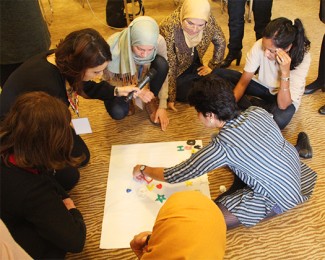
ICTJ’s Gender Symposium, held on February 2 to 4, 2019, in Tunis, Tunisia, brought together fearless women leaders working in 8 countries to advance the needs of victims and to bring gender issues to the center of transitional justice processes. What was achieved? What experiences cut across these diverse contexts? Kelli Muddell and Sibley Hawkins reflect on these questions and more in this short podcast.

On April 11, 2019, Jaqy Mutere, cofounder and coleader of Grace Agenda, accepted an award from Physicians for Human Rights recognizing the work of the Survivors of Sexual Violence in Kenya Network and Grace Agenda, a leader in this movement. Jaqy cofounded Grace Agenda after she began working with women who, like her, had experienced sexual violence during the protests that erupted in Kenya after the contested December 2007 elections.

Kaneleng are women who cannot bear children or whose children died at an early age. At a two-day summit held in December 2018, 25 kaneleng received training on transitional justice concepts. They worked to develop songs, comedy, and dramas that they will use to present justice messages through their work as traditional communicators.

Recent recognition of the work of Nobel Laureate Nadia Murad has drawn global attention to the issue of sexual violence and gender-based violence in conflict. But, as ICTJ Expert Kelli Muddell argues, the nuances of gender norms and how they impact women, men, and vulnerable populations are still often missing from conversations about victims.

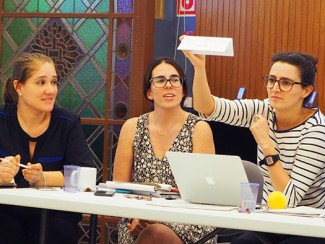
From October 1 to October 5, 2018, ICTJ hosted its eleventh intensive course on transitional justice in collaboration with the International Peace Center for in Barcelona. Participants included leaders in their respective fields, including human rights law, community justice and legal services, peacebuilding, education, and humanitarian affairs.

Enforced disappearances continue to affect hundreds of thousands of people around the world. The hopes of Sri Lankan victims reached a peak in 2015, when President Maithripala Sirisena was elected on a centrist platform and a commitment to truth, justice, and reconciliation. Later that year, the Sri Lankan government agreed to a UN Human Rights Council resolution that offered a roadmap for the search for the missing and forcibly disappeared. To the dismay of many, however, the government has done little since to implement these commitments and to take the opinions of victims seriously.

In the dynamic political landscape that has emerged following 50 years of conflict, Colombia is taking steps toward truth and accountability. The Commission for the Clarification of Truth, Coexistence, and Non-Repetition (the “Commission”) is scheduled to begin taking statements in November 2018. As part of its mandate, it will hear the stories of victims now living throughout the Diaspora.

Indigenous peoples are still some of the most marginalized and vulnerable communities around the world. In a conflict, they are often some of the most affected as their resource-rich territories are coveted by powerful and violent groups, their identity and loyalty perceived with mistrust, and their...