
32 results

The International Court of Justice issued a historic ruling finding Myanmar committed genocide against the Rohingya group during the 2017 “clearance operations,” in violation of its international obligations. The judgment represents a long-awaited acknowledgment of the victims who have suffered repeated gross violations of human rights because of their ethnicity and later due to their displacement, as well as an opportunity to recognize and support The Gambia’s own pursuit of justice.

At an ICTJ-organized symposium in Istanbul, artists, civil society leaders, journalists, academics, and transitional justice practitioners from around the world discussed the ways art can serve as a catalyst for change in societies emerging from conflict or repression as well as explored local non-state-led approaches to truth seeking and truth telling.

For many people in Lebanon, being uprooted from home is no longer an exceptional event. In this Expert’s Choice, ICTJ's Firas BouZeineddine draws a connection between the dire situation many Lebanese are facing and the culture of impunity that prevails in the country. In particular, he calls on domestic and external actors to be held accountable for past and present violations.

Recent Israeli strikes in Beirut and other populated areas in Lebanon, among the conflict's most intense so far, have destroyed critical infrastructure and devastated civilian communities. ICTJ stands unequivocally with the Lebanese people and all victims across the region and calls for an immediate end to all attacks on and threats to civilian communities and infrastructure.

On January 28, 2026, ICTJ held its annual January for Justice Leaders benefit dinner in New York City, an event celebrating leaders advancing justice around the world. This edition also marked the beginning of ICTJ’s 25th anniversary year and served as an opportunity to look back on a quarter century spent standing alongside victims, civil society, and institutions in the pursuit of truth, accountability, and lasting peace after mass atrocities.

In 2021, there were significant developments, some hopeful and some devastating, in the struggle for truth, accountability, and redress in countries around the world. ICTJ experts covered these events in commentaries and feature stories published on our website and in our newsletters. While 2022 is already underway and we at ICTJ are hard at work, we would like to pause a moment to take stock and reflect on the year that was.

New York, January 18, 2022— The International Center for Transitional Justice (ICTJ) is pleased to announce the “Wide Awake Art Contest,” an open call to Lebanese and Tunisian artists as well as artists living in Lebanon or Tunisia to explore the theme “the Sound of Dissent.” The contest will showcase works by those who are documenting and memorializing their communities’ stories in times of instability, resistance, and change.

The global COVID-19 pandemic forced many countries to impose emergency measures, such as curfews and community lockdowns, to stem the spread of the virus. To enforce these measures, some societies have given regular police forces increased power to enforce the measures, while others h...

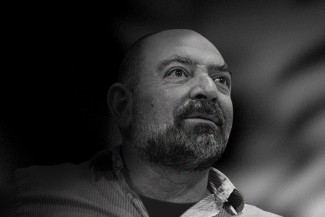
On February 4, 2021, the prominent activist, intellectual, writer, and filmmaker Lokman Slim joined the long list of victims of violence and impunity in Lebanon. The courageous human rights and political activist was found shot to death in his car in southern Lebanon.

Lebanon has long been afflicted by a combination of political deadlock and a lack of accountability that has resulted in ongoing human rights violations and overall systemic rot. Comprehensive reforms, along with an inclusive truth-seeking process, broad public dialogue, and other way...