
209 results

In the span of only one month, Tunisia has witnessed the historic passing of a transitional justice law and adoption of a new constitution. A key actor in the country's transition is the media.

To mark International Women’s Day, we invite you to read about four countries at the top of our gender justice priorities in the coming year, each with its own history, context, and complex sets of challenges.

For decades, Lebanese governments have made only partial and ineffective attempts to hold powerful individuals, groups, and foreign states accountable for violations committed on Lebanese soil, including against civilians. The consequences of their failure to act – for victims and Lebanese society – are grave. ICTJ's new report looks at the culture of impunity for serious violations of human rights continues to thrive in Lebanon.

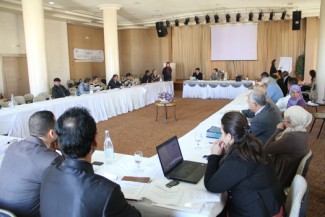
Nearly three years after violence in Cote d’Ivoire claimed the lives of over three thousand civilians and displaced hundreds of thousands, victims have yet to receive adequate reparation for the harm they suffered. ICTJ convened victims’ organizations, civil society, government officers and others to assess how the country should move forward to ensure victims see their right to reparation fulfilled.

Marking three years since Tunisia's revolution, ICTJ President David Tolbert argues that transitional justice developments in the country are not only worthy of attention, but serve as useful markers for transitions in the region and beyond.

Three years after Tunisia's revolution, victims in the south of the country are still facing severe economic and social marginalization. In recent workshops with ICTJ, they explain why collective reparations and development are both central parts of their vision of justice.

In this opinion piece, Lucia Withers argues that Nepal's elected parties and their representatives should not limit their discussions to the establishment of a truth commission or whether it will provide for amnesties and/or prosecutions. Rather, they should focus on designing policies that are more comprehensive and that would better serve the rights and needs of conflict victims and contribute to broader peace-building efforts.

Next week, the Colombian courts will issue the first partial verdict in the Justice and Peace case against the paramilitary leader Hebert Veloza García, alias “HH,” one of the most significant cases of the Justice and Peace process. Ahead of the HH partial verdict on October 30th, ICTJ is launching a comprehensive timeline on transitional justice measures implemented in Colombia since 2005 that recognize victims' rights to truth, justice, reparations, and the guarantee of non-recurrence.

A newly adopted UN Security Council resolution calls on the Syrian government to cooperate in destroying its chemical weapons arsenal, stressing that “those responsible for any use of chemical weapons must be held accountable.” Yet, it does not provide a framework for pursuing accountability, in the short or long term. What role might transitional justice play in a post-conflict Syria? Should Syria rush to prosecute war criminals once the fighting draws to a close? These are some of the pressing questions explored in ICTJ’s newest briefing paper.

ICTJ's documentary Voices of Dignity inspired Wilson Herrera, professor of philosophy and researcher at the Universidad del Rosario in Colombia, to reflect on the role of victims in a democratic society, and on the importance of empowering them as agents of change and rights-holders, rather than relegating them to the status of permanent victims.